BreastEd Lactation Studies Program

The BreastEd series is comprised of 10 unique courses, each dealing with a specific area or period of relevance to the breastfeeding mother and her infant. Together these courses provide a comprehensive study program in lactation and breastfeeding.
The aim of this program is to provide students with a comprehensive direction of study that will prepare them for the International Board of Lactation Consultant Examiners' (IBLCE) examination, while giving them the knowledge and confidence to become competent professionals in the field of lactation.
By developing and delivering this program online, a secondary aim is to provide a high quality study program accessible to students who, by preference or necessity, find the unlimited 12-month access to course content, tutoring and peer support best suits their needs.
The BreastEd series has been approved by the Lactation Education Accreditation and Approval Review Committee (LEAARC), which recognizes comprehensiveness and quality in lactation programs, and is the standard recommended for all programs of study for future Lactation Consultants.
The BreastEd series meets and exceeds the lactation-specific education prerequisite for those students preparing for the IBLCE examination to become a Lactation Consultant.
Enroll into the BreastEd Series in one transaction and have access to the whole program and tutors for a full 12 months. Alternatively, each course may be enrolled into individually for a one-month per course enrollment period, cumulative as you add each new course.
Download the full program description.

Click on a course title below to read more.
BE01: Breastmilk: Composition and Function
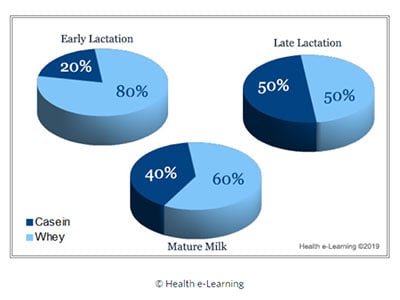
This course details the biochemistry and immunology of breastmilk and the importance of these components to the development of total health and well being of babies and mothers.
The relative health risks of not breastfeeding will be covered for you to understand clearly the significance of breastfeeding.

BE02: Anatomy and Physiology of the Lactating Breast
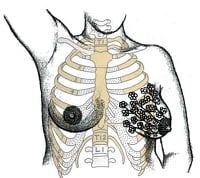
To understand the abnormal you must first have a comprehensive understanding of normal. In this course you will study breast anatomy and physiology from embryology to full lactation and quiescence, then examine the abnormalities of both structure and function that will impact on a mother's ability to breastfeed her child.

Read more: BE02: Anatomy and Physiology of the Lactating Breast
BE03: Positioning and Latch of the Baby to the Breast
In this course you will learn about breastfeeding-related maternal and infant anatomy and the infant's innate reflexes that facilitate breastfeeding. The physics of sucking and milk transfer will also be studied. Being aware of the principles of positioning and latch will allow you to apply this knowledge to any situation and be proficient at assessing a breastfeed for effectiveness.

Read more: BE03: Positioning and Latch of the Baby to the Breast
BE04: Breastfeeding Initiation and the First Week
This course is designed for the practitioner who cares for mothers prenatally or intrapartum, or the mother and baby in the first week postpartum. The positive and negative influences of prenatal and birthing circumstances as they affect breastfeeding are discussed. You will learn about the normal course of lactation, such as getting the first breastfeed right and the changes in mother's breasts and milk. Common problems, such as engorgement, nipple damage, breast refusal, hypoglycemia, jaundice, etc will be discussed in terms of cause, prevention and management strategies.

Read more: BE04: Breastfeeding Initiation and the First Week
BE05: Communication and Education
Of all the skills essential to a health care professional, it could be said that the most important of these is communication skills. Without the ability to communicate effectively your knowledge, skills and care cannot be shared. In this course you will learn about the strategies that define a good communicator, and have the opportunity to apply your knowledge. Being in a position of respect as a health professional you will be asked to address groups of people, the public, colleagues, or parents and therefore this course will help you to prepare for public speaking, as well as develop effective workshops, classes and written materials.

BE06: Breastmilk, Breastfeeding & the Preterm Baby
This course reviews the specific nutritional, immunological, developmental and psychological needs of the preterm baby and the critical role of breastmilk to each of these. You will learn strategies to apply to your clinical practice which will facilitate transition from fully supported medical care to breastfeeding.

Read more: BE06: Breastmilk, Breastfeeding & the Preterm Baby
BE07: Breastfeeding After the First Week
In this course you will examine the normal progress of the infant to around two years of age, looking at expected growth and development and breastfeeding behavior.
Problems encountered will be viewed in terms of cause, prevention and management strategies. Infant issues include sucking issues, jaundice, excessive crying, intolerances, allergies and reflux, and failure to thrive. Maternal issues include nipple conditions, breast problems, breastmilk supply problems and how to guide a mother during times of separation from her infant.

BE08: Breastmilk, Lactation and Medications
This course provides easily understandable explanations of the complex mechanisms that affect transfer of drugs and substances into breastmilk, infant exposure and infant uptake of the medication. You will learn about medications contraindicated during lactation and those commonly prescribed for breastfeeding mothers such as galactagogues, antibiotics, antidepressants and analgesics. Social and illicit drugs and environmental contaminants and their effect on lactation and the infant are examined.
An understanding of these factors is vital for you to provide breastfeeding mothers with accurate information about the potential effects of medications on her baby via breastmilk.

BE09: Other Factors Affecting the Breastfeeding Dyad
This course covers issues affecting the mother and/or infant that are less commonly encountered. It is designed to extend your knowledge in counseling and supporting the mother for the best achievable health when she is affected by such conditions as breast surgery, diabetes, asthma, thyroid disease, obesity, lupus, Rh arthritis, infectious diseases (hepatitis, HIV, CMV, HTLV-1, etc), or infants have oro-facial abnormalities or muscle and neurological disorders. Other issues considered include maternal nutrition, sexuality, contraception, relactation, tandem breastfeeding and breastfeeding multiples.

Read more: BE09: Other Factors Affecting the Breastfeeding Dyad
BE10: Evolution of Breastfeeding as a Public Health Issue
Evolution of Breastfeeding as a Public Health Issue traces the way breastfeeding has been practiced, prescribed, regulated and thought about from ancient times to the present day in an interesting time-line format. This course provides food for thought about the political, social and economic issues which threaten breastfeeding and local, national and international initiatives to protect, promote and support it.

Read more: BE10: Evolution of Breastfeeding as a Public Health Issue